
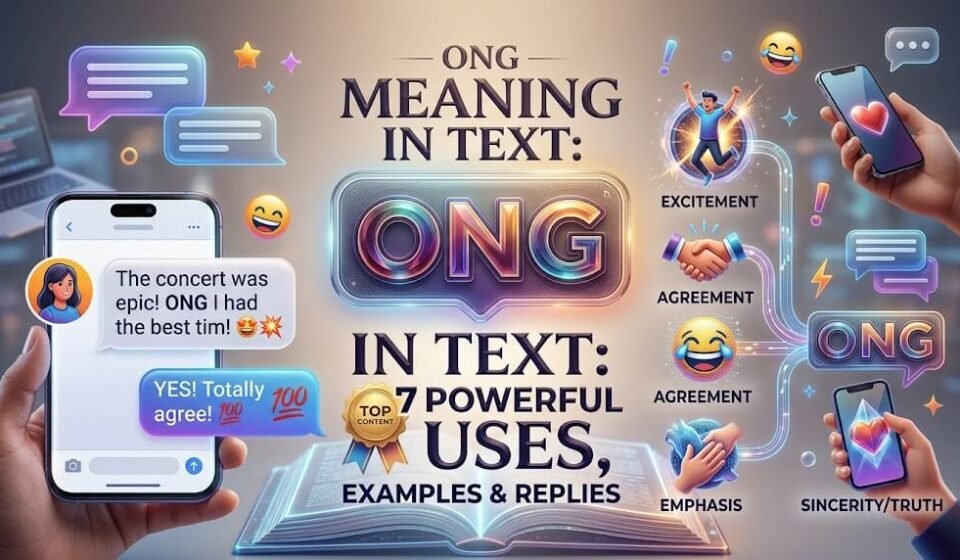

ONG Meaning in Text is “On God,” a popular texting abbreviation used in online chats, social media conversations, and messages. People use ONG to show that they are being honest, serious, or strongly agreeing with something.
Similar to phrases like “I swear,” “Honestly,” or “I really mean it,” ONG adds extra emphasis to a statement and helps people express their feelings quickly in casual conversations.
Whether you see ONG on TikTok, Instagram, Snapchat, WhatsApp, or in regular text messages, its meaning can depend slightly on the context. In this guide, you’ll learn what ONG means in text, where it came from, how people use it, and the best ways to reply when someone says ONG.
What Does ONG Mean in Texting and Online Conversations?
ONG means “On God” in texting and online conversations. People use this slang abbreviation to show that they are being honest, serious, or telling the truth about something. It is often used in the same way as phrases like “I swear,” “Honestly,” or “I promise” to add emphasis to a statement. For example, when someone says, “ONG, this is the best game ever,” they are showing that they genuinely mean what they are saying.
In online chats and social media platforms like TikTok, Instagram, Snapchat, and WhatsApp, ONG is commonly used in casual conversations to express strong feelings, agreement, excitement, or certainty.
While the most common meaning of ONG is “On God,” the exact meaning can sometimes depend on the context of the conversation and how the person is using it. In most cases, seeing ONG in a message means the person wants to emphasize that they are being truthful or serious.
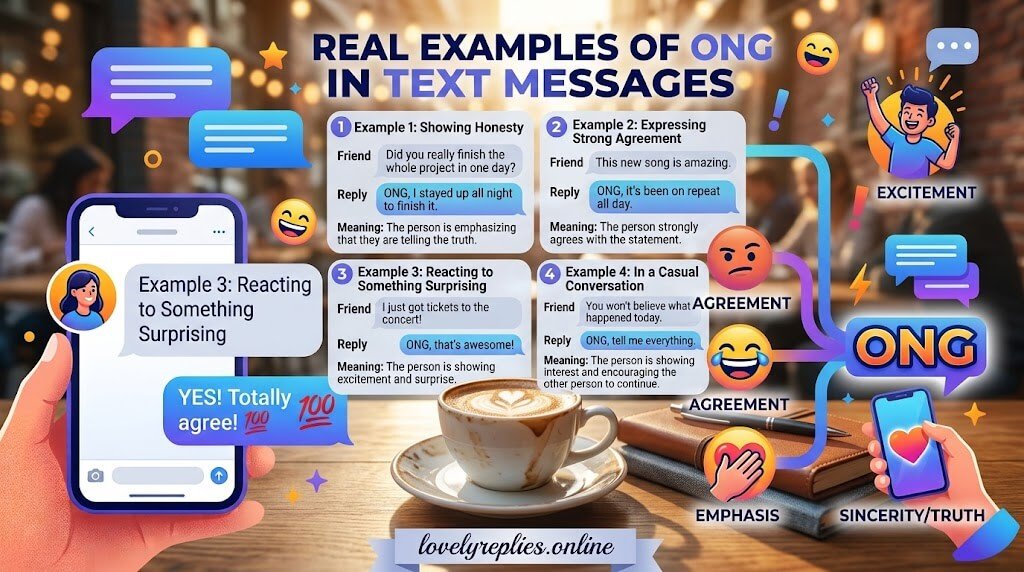
Real Examples of ONG in Text Messages
Seeing ONG used in real text messages makes it easier to understand how this slang abbreviation works in everyday conversations. Since ONG means “On God,” people usually use it when they want to show that they are telling the truth, making a serious statement, or strongly agreeing with something. It is commonly seen in casual chats between friends, especially on social media and messaging apps.
Here are some real examples of how people use ONG in text messages and online conversations:
Example 1: Showing Honesty
Friend: “Did you really finish the whole project in one day?”
Reply: “ONG, I stayed up all night to finish it.”
Meaning: The person is emphasizing that they are telling the truth.
Example 2: Expressing Strong Agreement
Friend: “This new song is amazing.”
Reply: “ONG, it’s been on repeat all day.”
Meaning: The person strongly agrees with the statement.
Example 3: Reacting to Something Surprising
Friend: “I just got tickets to the concert!”
Reply: “ONG, that’s awesome!”
Meaning: The person is showing excitement and surprise.
Example 4: In a Casual Conversation
Friend: “You won’t believe what happened today.”
Reply: “ONG, tell me everything.”
Meaning: The person is showing interest and encouraging the other person to continue.
Example 5: Talking About an Opinion
Friend: “That movie was the best one this year.”
Reply: “ONG, I totally agree.”
Meaning: The person strongly agrees with the opinion.
These examples show that ONG in texting is mainly used to add emphasis to a message. Whether someone is proving they are honest, showing excitement, or agreeing with another person, ONG helps make their feelings stronger in casual online conversations.
Where Did ONG Come From?
The slang abbreviation ONG comes from the phrase “On God,” which has been used in everyday speech to emphasize honesty, seriousness, or the truthfulness of a statement. The phrase is connected to the idea of swearing by God or making a strong promise that something is true. Over time, as online communication became shorter and faster, people began shortening “On God” to ONG in text messages and social media posts.
ONG became more popular through internet culture, social media platforms, and youth slang, especially on apps like TikTok, Instagram, Snapchat, and Twitter (X). It is often used in casual conversations, memes, and videos to show strong agreement, excitement, or that someone is being completely serious. Today, ONG is mainly recognized as a modern texting abbreviation that helps people express emphasis quickly without typing the full phrase “On God.”
Why Do People Use ONG in Texts?
People use ONG in texts because it is a quick way to show that they are being honest, serious, or strongly agreeing with something. Instead of typing phrases like “I swear,” “Honestly,” or “I really mean it,” people use ONG to make their message more powerful and show that they truly believe what they are saying. It is commonly used in casual conversations with friends and online communities.
Examples of Using ONG in Text Messages:
Example 1: Showing That Something Is True
Friend: “Did you really watch the whole series in one night?”
Reply: “ONG, I couldn’t stop watching it.”
Meaning: The person is emphasizing that they are telling the truth.
Example 2: Strong Agreement
Friend: “This restaurant has the best food ever.”
Reply: “ONG, the food was amazing.”
Meaning: The person strongly agrees with the statement.
Example 3: Expressing Excitement
Friend: “I got accepted into my dream college!”
Reply: “ONG, that’s incredible! Congrats!”
Meaning: The person is showing excitement and support.
Example 4: Sharing an Honest Opinion
Friend: “Do you think this movie is worth watching?”
Reply: “ONG, it’s one of the best movies I’ve seen.”
Meaning: The person is seriously recommending the movie.
These examples show that ONG is mainly used to add honesty, excitement, and emphasis to a message. It helps people express stronger emotions while keeping conversations short and casual.
Different Ways ONG Is Used in Conversations
The meaning and purpose of ONG in conversations can change slightly depending on the situation and the tone of the message. While ONG usually means “On God,” people use it in different ways to show honesty, agreement, excitement, or strong feelings. It is commonly used in casual chats with friends, family, and online communities where texting slang is popular.
Here are some common ways ONG is used in text messages and online conversations:
1. ONG to Show Honesty
People often use ONG when they want to prove that they are telling the truth. It adds emphasis and shows that they are serious about their statement.
Example:
Friend: “Did you really finish all your homework already?”
Reply: “ONG, I finished it before dinner.”
Meaning: The person is saying they are being honest.
2. ONG to Show Strong Agreement
ONG can also be used when someone strongly agrees with another person’s opinion or statement. It works like saying “Exactly” or “I swear, yes.”
Example:
Friend: “This is the best song I’ve heard this year.”
Reply: “ONG, it’s so good.”
Meaning: The person completely agrees.
3. ONG to Express Excitement or Surprise
People use ONG when they are excited, shocked, or reacting strongly to something.
Example:
Friend: “I just bought tickets for the concert!”
Reply: “ONG, no way! That’s amazing.”
Meaning: The person is showing excitement and surprise.
4. ONG to Emphasize an Opinion
Sometimes people use ONG before sharing a personal opinion to show that they genuinely believe what they are saying.
Example:
“ONG, this is the funniest video I’ve ever seen.”
Meaning: The person strongly believes the statement is true.
5. ONG in Casual Social Media Chats
On platforms like TikTok, Instagram, Snapchat, and WhatsApp, ONG is often used in comments, direct messages, and casual conversations to make reactions feel stronger and more expressive.
Example:
“ONG 😂 I can’t believe that happened.”
Meaning: The person is reacting strongly to something surprising.
Overall, ONG is a flexible texting abbreviation used to add emotion and emphasis to messages. Whether someone is showing honesty, agreeing with a friend, or reacting with excitement, the meaning is usually clear from the context of the conversation.
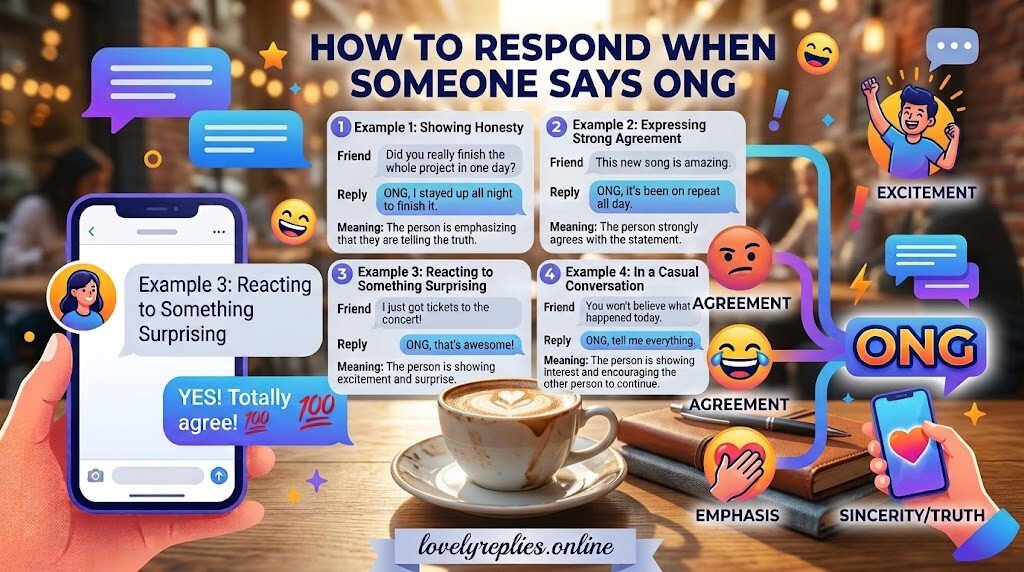
The best way to respond to ONG depends on the context of the conversation and what the person is trying to express. Since ONG usually means “On God” and is used to show honesty, excitement, or strong agreement, your reply should match the tone of the message. You can respond by agreeing, asking for more details, or continuing the conversation naturally.
Here are some common ways to reply when someone says ONG in a text message:
1. When Someone Is Agreeing With You
If someone says ONG to show they agree, you can continue the conversation with a similar reaction.
Example:
Friend: “ONG, this movie was amazing.”
Reply: “Right? I knew you’d like it too!”
2. When Someone Is Proving They Are Telling the Truth
If someone uses ONG to emphasize that they are being honest, you can respond by acknowledging their statement.
Example:
Friend: “ONG, I didn’t know about the surprise party.”
Reply: “Haha, I believe you. That’s actually funny.”
3. When Someone Shares Exciting News
If ONG is used as a reaction to exciting news, respond with enthusiasm and encouragement.
Example:
Friend: “ONG, I got the job!”
Reply: “That’s awesome! Congratulations!”
4. When You Want to Keep the Conversation Going
You can ask a follow-up question to continue the chat.
Example:
Friend: “ONG, this place has the best food.”
Reply: “Really? What did you order?”
5. Casual Replies to ONG
Some simple responses you can use include:
- “I know, right?”
- “Exactly!”
- “For real!”
- “Same!”
- “No way 😂”
- “I totally agree.”
- “That’s what I’m saying!”
- “Haha, seriously!”
Overall, there is no single correct reply to ONG. The best response depends on whether the person is showing honesty, agreeing with you, or reacting emotionally. Matching their tone will make the conversation feel more natural.
ONG Examples in Different Platforms
ONG is commonly used across different social media platforms and messaging apps where people communicate casually using short forms and internet slang. While the meaning remains the same, “On God”, the way people use it can change depending on the platform, conversation style, and audience. It is often used to express honesty, excitement, agreement, or strong reactions.
Here are some examples of how ONG is used on different platforms:
1. ONG on TikTok
On TikTok, people often use ONG in comments and captions to show that they strongly agree with a video, opinion, or trend. It is commonly seen in reactions to funny, surprising, or relatable content.
Example:
Video Caption: “This is the best song of the year.”
Comment: “ONG, I’ve had it on repeat all week.”
Meaning: The person strongly agrees with the statement.
2. ONG on Instagram
On Instagram, users may use ONG in comments, Stories, or direct messages when reacting to photos, videos, or updates from friends.
Example:
Friend’s Story: “Finally finished my new project!”
Reply: “ONG, you did an amazing job!”
Meaning: The person is showing excitement and support.
3. ONG on Snapchat
On Snapchat, ONG is often used in quick chats between friends. Since Snapchat conversations are usually short and casual, abbreviations like ONG are common.
Example:
Friend: “Did you really meet that celebrity?”
Reply: “ONG, yes! It was crazy.”
Meaning: The person is emphasizing that they are telling the truth.
4. ONG on WhatsApp
On WhatsApp, people use ONG in private conversations with friends, family members, or groups to express strong feelings or agreement.
Example:
Friend: “This restaurant has the best burgers.”
Reply: “ONG, the food was incredible.”
Meaning: The person strongly agrees with the opinion.
5. ONG on Text Messages (SMS)
In regular text messages, ONG is mainly used among people who are familiar with texting slang. It helps make conversations faster and more expressive.
Example:
Friend: “Are you serious about moving there?”
Reply: “ONG, I’m actually doing it.”
Meaning: The person is confirming that they are serious.
6. ONG in Online Comments
People also use ONG in online discussions, gaming chats, and community posts when reacting to someone’s opinion or experience.
Example:
User Comment: “This game update changed everything.”
Reply: “ONG, the new features are amazing.”
Meaning: The person agrees strongly.
Overall, ONG has the same meaning across platforms, but its usage depends on the situation. Whether it appears on TikTok, Instagram, Snapchat, WhatsApp, or regular text messages, it is mainly used to add emphasis and show that someone is being honest, serious, or strongly agreeing with something.
ONG vs Other Popular Text Slang
When texting or chatting online, many abbreviations can look similar because they are all used to express feelings, reactions, or quick responses. ONG (“On God”) is mainly used to show honesty, seriousness, or strong agreement, while other popular texting slang has different meanings and purposes. Understanding the difference between these abbreviations helps you follow online conversations more easily.
Here is how ONG compares with other common texting slang:
ONG vs OMG (Oh My God)
Although ONG and OMG look similar, they have completely different meanings.
ONG = On God
Used to show that someone is being truthful, serious, or strongly agreeing.
OMG = Oh My God
Used to express surprise, excitement, shock, or disbelief.
Examples:
Friend: “I just won the competition!”
Reply: “OMG, that’s amazing!”
Meaning: Showing excitement.
Friend: “This is the best restaurant ever.”
Reply: “ONG, you’re right.”
Meaning: Strong agreement.
ONG vs LOL (Laugh Out Loud)
ONG and LOL are used for different purposes.
ONG = On God
Shows honesty or emphasis.
LOL = Laugh Out Loud
Shows that something is funny or makes someone laugh.
Examples:
“ONG, I really forgot my keys.”
Meaning: The person is emphasizing that it is true.
“LOL, that video was hilarious.”
Meaning: The person found something funny.
ONG vs TBH (To Be Honest)
Both ONG and TBH can be related to honesty, but they are used differently.
ONG = On God
Used to strongly confirm something or swear that something is true.
TBH = To Be Honest
Used when sharing an honest opinion or personal thought.
Examples:
“ONG, I didn’t know about it.”
Meaning: I swear it is true.
“TBH, I don’t really like that movie.”
Meaning: Sharing an honest opinion.
ONG vs FR (For Real)
ONG and FR are often used in similar situations because both can show agreement or seriousness.
ONG = On God
Adds emphasis and shows that someone truly means something.
FR = For Real
Means “seriously” or “really.”
Examples:
“ONG, this is the best game ever.”
“FR, I agree with you.”
Both show that the person strongly agrees.
ONG vs IKR (I Know Right)
ONG is used to emphasize a statement, while IKR is used to agree with something someone said.
Examples:
Friend: “This weather is perfect today.”
Reply: “IKR, I love it.”
Friend: “This place has amazing food.”
Reply: “ONG, it’s so good.”
Quick Comparison Table
| Slang | Full Form | Meaning | Common Use |
| ONG | On God | Showing honesty or seriousness | Emphasizing a statement |
| OMG | Oh My God | Showing surprise or excitement | Reacting to something |
| LOL | Laugh Out Loud | Showing laughter | Funny situations |
| TBH | To Be Honest | Sharing an honest opinion | Personal thoughts |
| FR | For Real | Showing agreement or seriousness | Confirming something |
| IKR | I Know Right | Agreeing with someone | Casual reactions |
Overall, ONG is mainly used to show that someone is serious, honest, or strongly agrees with something. While slang terms like OMG, LOL, TBH, FR, and IKR may appear in similar conversations, each one has its own meaning and purpose in texting.
Common Mistakes When Using ONG
Although ONG is a popular texting abbreviation, many people misunderstand its meaning or use it in the wrong situations. Since ONG is informal slang, it is important to understand the context before using it. Using ONG incorrectly can make your message confusing or change the meaning of what you are trying to say.
Here are some common mistakes people make when using ONG in text messages and online conversations:
1. Confusing ONG With OMG
One of the most common mistakes is thinking that ONG and OMG mean the same thing because they look similar. However, they have completely different meanings.
ONG = On God
Used to show honesty, seriousness, or strong agreement.
OMG = Oh My God
Used to express surprise, excitement, or shock.
Example:
❌ “ONG, I can’t believe this happened!”
(If you mean surprise, OMG would be more suitable.)
✅ “OMG, I can’t believe this happened!”
2. Using ONG in Formal Conversations
ONG is a casual internet abbreviation, so it is not suitable for professional emails, work messages, or formal conversations. Some people may not understand the slang or may find it too informal.
Example:
❌ “ONG, I completed the report.”
✅ “I have completed the report.”
Using complete sentences creates a more professional impression.
3. Using ONG Without Understanding the Context
Another mistake is adding ONG to a message without knowing how it fits into the conversation. ONG is usually used to emphasize a statement, not as a random reaction.
Example:
❌ Friend: “What time is the meeting?”
Reply: “ONG.”
This does not clearly communicate any meaning.
✅ Friend: “This movie is incredible.”
Reply: “ONG, it’s one of the best movies I’ve seen.”
Here, ONG makes sense because it shows agreement.
4. Thinking ONG Always Means “I Swear”
Although ONG is often similar to saying “I swear,” it can also show agreement, excitement, or emphasis depending on the situation. Limiting its meaning to only one use can cause confusion.
Example:
“ONG, this song is amazing.”
Meaning: The person strongly agrees or emphasizes their opinion.
5. Overusing ONG in Every Message
Using ONG too often can make conversations feel unnatural. Like other slang words, it works best when used occasionally and in the right situations.
Example:
Instead of writing:
“ONG that’s funny. ONG that’s crazy. ONG I love it.”
Use it naturally:
“ONG, that’s actually hilarious.”
6. Using ONG With People Who May Not Know Slang
Not everyone understands internet abbreviations. If you are talking to someone unfamiliar with texting slang, it is better to use the full phrase or a clearer expression.
Example:
Instead of:
“ONG, I’m serious.”
Use:
“I swear, I’m serious.”
Overall, ONG is easy to use when you understand its meaning and the situation. It works best in casual conversations where people use texting slang, but it should be avoided in formal communication or when the meaning may not be clear. Using ONG naturally helps your messages sound more authentic and easier to understand.
Related Slang Terms Similar to ONG
Since ONG (“On God”) is used to show honesty, seriousness, or strong agreement, it is often used alongside other texting slang terms that express similar feelings. These abbreviations help people emphasize their opinions, reactions, or emotions during casual online conversations. However, each slang term has a slightly different meaning and purpose.
Here are some popular slang terms that are similar to ONG:
1. FR (For Real)
FR means “For Real” and is used to show that someone is serious, surprised, or agrees with something. Like ONG, it can add emphasis to a statement.
Examples:
“FR, this is the best movie I’ve watched.”
Meaning: The person genuinely believes the statement.
“Are you FR right now?”
Meaning: Are you serious?
2. TBH (To Be Honest)
TBH stands for “To Be Honest” and is used when someone wants to share their true opinion or feelings. Unlike ONG, it usually introduces an honest thought rather than confirming something.
Examples:
“TBH, I didn’t like that song.”
Meaning: The person is sharing their honest opinion.
“TBH, you did a great job.”
Meaning: The person is giving a sincere opinion.
3. IKR (I Know Right)
IKR is used when someone strongly agrees with another person. It is similar to ONG because both can show agreement, but IKR is more like saying “Exactly” or “I agree.”
Examples:
Friend: “This weather is perfect today.”
Reply: “IKR, I love it.”
Meaning: The person agrees with the statement.
4. NGL (Not Gonna Lie)
NGL means “Not Gonna Lie” and is used before sharing an honest thought, opinion, or feeling. It is often used in casual conversations and social media posts.
Examples:
“NGL, this game is amazing.”
Meaning: The person is honestly saying they like the game.
“NGL, I was nervous at first.”
Meaning: The person is sharing a real feeling.
5. ISTG (I Swear To God)
ISTG means “I Swear To God” and is one of the closest slang terms to ONG. Both are used to emphasize honesty, frustration, excitement, or seriousness.
Examples:
“ISTG, I didn’t do it.”
Meaning: The person strongly insists they are telling the truth.
“ISTG, this is the funniest thing ever.”
Meaning: The person is emphasizing their reaction.
6. No Cap
No cap means “No lie” or “I’m being honest.” It is commonly used to show that someone is telling the truth, making it similar to ONG.
Examples:
“No cap, this restaurant is incredible.”
Meaning: The person is being honest about their opinion.
“No cap, I finished the whole project today.”
Meaning: The person is emphasizing that it is true.
Quick Comparison Table
| Slang | Full Form | Meaning | Common Use |
| ONG | On God | Showing honesty or seriousness | Emphasizing a statement |
| FR | For Real | Showing seriousness or agreement | Confirming something |
| TBH | To Be Honest | Sharing an honest opinion | Giving thoughts |
| IKR | I Know Right | Showing agreement | Agreeing with someone |
| NGL | Not Gonna Lie | Sharing a true opinion | Honest statements |
| ISTG | I Swear To God | Strong emphasis | Proving honesty |
| No Cap | No lie | Saying something is true | Showing sincerity |
Overall, ONG is part of a larger group of internet slang terms used to express honesty, agreement, and strong emotions. While terms like FR, TBH, NGL, ISTG, and No Cap may have similar meanings, the best choice depends on the tone and context of the conversation.
When Should You Use ONG?
You should use ONG (“On God”) in casual conversations when you want to show that you are being honest, serious, or strongly agree with something. It is commonly used in text messages, social media chats, and online conversations with friends or people who are familiar with internet slang. ONG helps add extra emphasis to your message and shows that you genuinely mean what you are saying.
Here are some situations where using ONG in texting makes sense:
1. Use ONG When You Want to Show Honesty
People often use ONG when they want others to know that they are telling the truth. It works like saying “I swear” or “I’m serious.”
Example:
Friend: “Did you really finish the entire book in one day?”
Reply: “ONG, I couldn’t put it down.”
Meaning: The person is emphasizing that they are being truthful.
2. Use ONG When You Strongly Agree
ONG can be used when you completely agree with someone’s opinion or statement. It adds more emotion than a simple “yes” or “I agree.”
Example:
Friend: “This restaurant has the best food in town.”
Reply: “ONG, the burgers are amazing.”
Meaning: The person strongly agrees.
3. Use ONG When Reacting to Something Exciting
People also use ONG when they are surprised, excited, or reacting strongly to news or events.
Example:
Friend: “I got tickets to my favorite concert!”
Reply: “ONG, that’s so cool!”
Meaning: The person is showing excitement.
4. Use ONG in Casual Social Media Conversations
ONG is commonly used on platforms like TikTok, Instagram, Snapchat, WhatsApp, and Messenger where informal language and short replies are normal.
Example:
Comment: “This video is too funny.”
Reply: “ONG 😂 I watched it five times.”
Meaning: The person strongly agrees with the comment.
5. Use ONG With Friends and People You Know Well
Since ONG is informal slang, it works best with friends, classmates, siblings, or online friends who understand texting abbreviations.
Examples:
- “ONG, you need to try this game.”
- “ONG, I’m not even joking.”
- “ONG, that was the funniest thing ever.”
Overall, ONG is best used when you want to add emphasis, honesty, or excitement to a casual message. It is a popular way to make conversations feel more expressive, but it should mainly be used in informal chats rather than professional or formal communication.
Why Gen Z Slang Like ONG Is Changing Online Communication
Gen Z slang like ONG (“On God”) is changing online communication by making conversations faster, shorter, and more expressive. Instead of using long sentences to explain feelings or reactions, people use short abbreviations and slang terms to communicate emotions, opinions, and attitudes quickly. Words like ONG, FR, NGL, and No Cap allow users to add personality and emphasis to their messages while keeping chats simple.
Social media platforms like TikTok, Instagram, Snapchat, and WhatsApp have played a major role in spreading Gen Z slang. Trends, memes, and viral videos help new expressions become popular among millions of users in a short time. As a result, slang like ONG has become more than just a shortcut; it has become a way for people to show their identity, connect with online communities, and communicate in a more casual and relatable style.
Gen Z Slang Makes Communication More Emotional
One reason slang like ONG is popular is that it adds emotion to digital conversations. Text messages often lack facial expressions and voice tone, so people use slang to show how they feel.
Example:
“ONG, this is the funniest video ever 😂”
The word ONG adds extra emphasis and shows that the person strongly believes what they are saying.
Slang Helps People Communicate Faster
Online conversations move quickly, and users often prefer short expressions instead of typing full sentences. Abbreviations like ONG save time while still delivering the intended meaning.
Example:
Instead of writing:
“I swear this is the best game I have ever played.”
Someone might write:
“ONG, this game is amazing.”
Slang Creates Online Identity and Connection
Gen Z slang also helps people feel connected to a specific online culture. Using expressions like ONG can make conversations feel more natural among people who understand the same trends and language.
However, slang meanings can change quickly, and not everyone understands every abbreviation. This is why context is important when interpreting terms like ONG.
Overall, Gen Z slang like ONG is transforming online communication by making messages shorter, more expressive, and more connected to digital culture. While traditional language remains important, internet slang continues to shape the way people interact, especially in casual online conversations.
ONG Meaning in Text – Quick Reference Table
The abbreviation ONG is commonly used in texting and online conversations to show honesty, seriousness, or strong agreement. While its meaning can depend on the context, the most common meaning of ONG is “On God.” This quick reference table helps you understand what ONG means and how it is used.
| Text Slang | Full Form | Meaning | Common Usage |
| ONG | On God | Used to show honesty, seriousness, or emphasis | “ONG, I’m telling the truth.” |
| ONG | On God | Used to strongly agree with someone | “ONG, this song is amazing.” |
| ONG | On God | Used to express excitement or a strong reaction | “ONG, that was crazy!” |
Quick Examples of ONG in Texting:
- “ONG, I didn’t know about it.”
Meaning: I swear, I’m being honest. - “ONG, this is the best movie ever.”
Meaning: I strongly agree or believe this is true. - “ONG 😂 I can’t believe that happened.”
Meaning: Showing a strong emotional reaction.
In short, ONG means “On God” in most text conversations and is mainly used to add emphasis, honesty, or emotion to a message. It is a casual slang term commonly seen in social media chats, text messages, and online conversations.
Frequently Asked Questions About ONG
What does ONG mean in text?
ONG means “On God” in texting. People use it to show honesty, seriousness, strong agreement, or emphasis in casual conversations.
What does ONG mean on social media?
On social media, ONG usually means “On God.” It is commonly used in comments, captions, and chats to express agreement, excitement, honesty, or a strong reaction.
Is ONG the same as OMG?
No. ONG means “On God,” while OMG means “Oh My God.” ONG is mainly used for honesty, seriousness, or agreement, while OMG is used to express surprise or excitement.
How do you use ONG in a text?
You can use ONG before a statement when you want to add emphasis. For example, “ONG, this is the best movie ever” shows that you strongly believe or agree with the statement.
What is the difference between ONG and FR?
ONG means “On God” and is used to emphasize honesty or agreement. FR means “For Real” and is commonly used to show seriousness, agreement, or confirmation.
Can I use ONG in formal messages?
ONG is informal texting slang, so it is better to avoid using it in professional emails, formal messages, or other situations where clear and formal language is expected.
How should I reply when someone says ONG?
Your reply depends on the context. You can say “Exactly!”, “For real!”, “I know, right?”, “Same!”, or ask a follow up question to continue the conversation.
Is ONG a Gen Z slang term?
ONG is widely used as modern internet and texting slang, especially in casual online conversations and social media. It has become popular through internet culture and social platforms.
Read more:
WYD Meaning in Text: 7+ Examples, Uses & Best Replies